Out of the darkness, a crazed giant with bulging eyes gnaws at a headless body clutched in his hands. It is one of the “Black Paintings” Goya made on the walls of his own house late in life, never intended for public view, and one of the most disturbing images in Western art.
Key facts
- Artist
- Francisco Goya1746–1828 · Spanish
- Date
- c. 1819–23
- Period
- Romanticism1790–1850
- Medium
- Mural transferred to canvas
- Dimensions
- 143.5 × 81.4 cm
- Location
- Museo del Prado Madrid, Spain
Actual size
Compared with an adult 170 cm tall
Palette
#0F1622#010208#2D2A28#574C38#978862Background
In 1819 Goya, in his seventies and completely deaf, bought a country house outside Madrid known locally as the Quinta del Sordo (House of the Deaf Man). On the walls of its two main rooms he painted fourteen dark murals, later called the Black Paintings.
The murals had no titles and no explanations; Goya never spoke of their meaning. Saturn Devouring His Son was painted on the wall of the ground-floor dining room.
In 1874 a later owner had the murals removed from the walls and transferred to canvas; they were given to the Prado in 1881. The transfer caused some damage.
Technique & composition
Goya painted directly on the plaster with rough, rapid strokes in little more than black, grey, ochre and a streak of . The figure emerges from pitch darkness as if crawling out of a nightmare.
The giant's body is twisted and hunched, as if trapped by the narrow frame. and convey madness and terror, as though he is horrified by his own act.
Details
Symbolism
The myth of the devouring father
In Roman myth Saturn (the Greek Cronus) was told that one of his sons would overthrow him, so he swallowed each child at birth to keep his throne. Rubens painted the same subject, but Goya's version is far more primal and deranged.
Time, power and madness
Scholars have offered many readings: Saturn as all-consuming Time; as the Spanish absolutist regime devouring its own people; or as Goya's fear of old age, illness and death. These interpretations need not exclude one another, and that is the painting's power.
Stories
- Did you know?
The body being devoured looks like an adult rather than an infant, which makes the image even more disturbing.
- Did you know?
Some scholars, working from early photographs, argue that the original mural was more explicit and that some details were altered or lost in the transfer to canvas.
- Did you know?
That Goya chose to paint this on the wall of a dining room raises unsettling questions about his state of mind.
Legacy
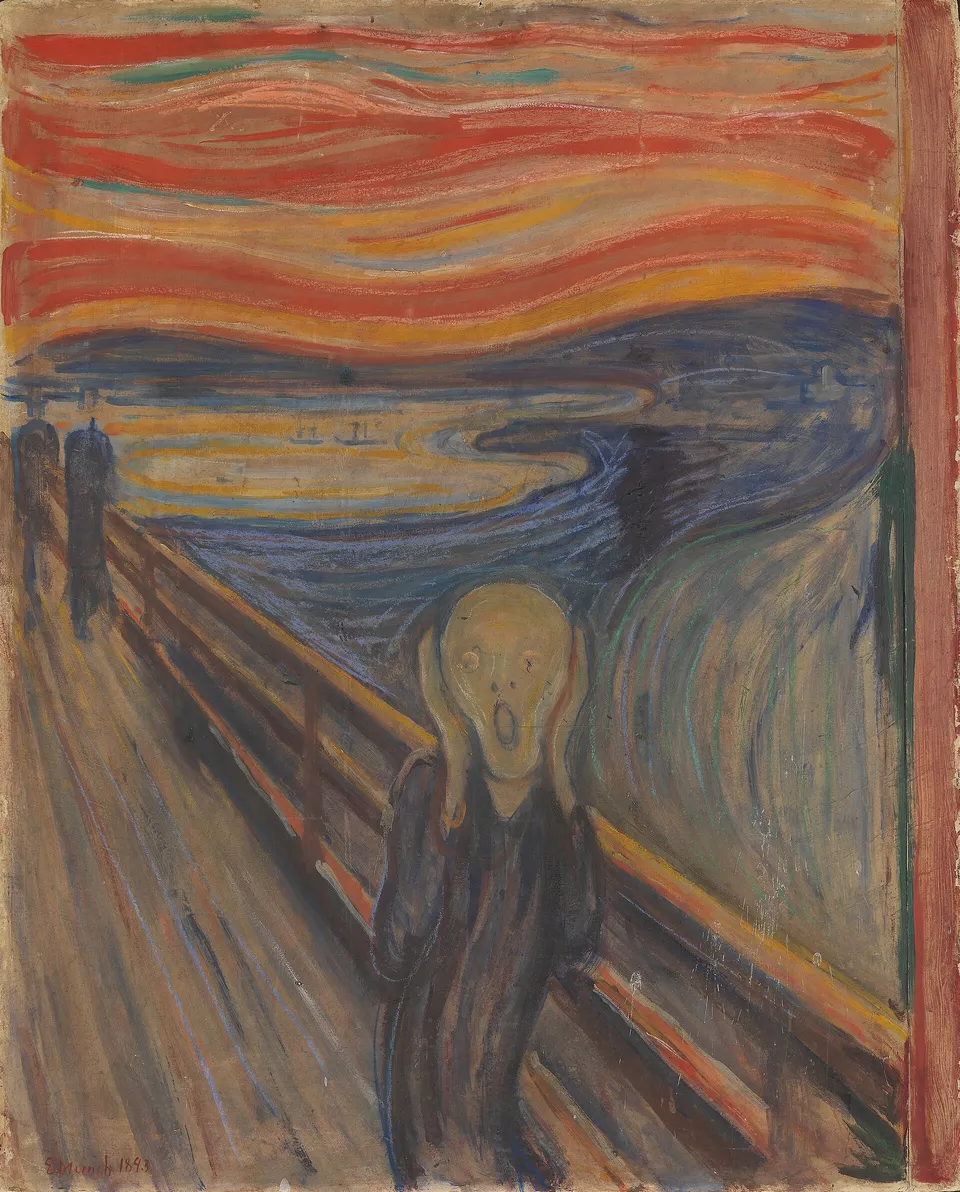
The Black Paintings anticipated twentieth-century Expressionism; their unflinching look at inner fear and darkness influenced artists such as Munch and Francis Bacon. Saturn Devouring His Son has become a classic image of horror in popular culture, appearing in films, album covers and comics.