Two women pin down an enemy general while one saws through his neck with a sword, blood spraying across the white sheets. Artemisia Gentileschi's Judith is calm, decisive and powerful, utterly unlike the delicate, hesitant heroines of her male contemporaries.
Key facts
- Artist
- Artemisia Gentileschi1593–1656 · Italian
- Date
- c. 1620
- Period
- Baroque1600–1720
- Medium
- Oil on canvas
- Dimensions
- 146.5 × 108 cm
- Location
- Uffizi Gallery Florence, Italy
Actual size
Compared with an adult 170 cm tall
Palette
#120E13#35241E#634A33#9A7749#D8B56DBackground
The story comes from the Book of Judith: the Assyrian general Holofernes besieges the Jewish city of Bethulia. The widow Judith enters the enemy camp with her maid Abra, disarms him with her charm and, when he falls into a drunken sleep, cuts off his head, saving her people.
Artemisia painted at least two similar versions: one of about 1612–13 is in the Museo di Capodimonte in Naples; this one, painted around 1620 in Florence for Cosimo II de' Medici, Grand Duke of Tuscany, is in the Uffizi.
Many writers link the painting to her rape at eighteen by the painter Agostino Tassi and the torture she endured at the trial, reading it as an artistic revenge. Recent scholars caution against reducing her achievement to trauma: she was also a superbly skilled, market-savvy professional painter.
Technique & composition
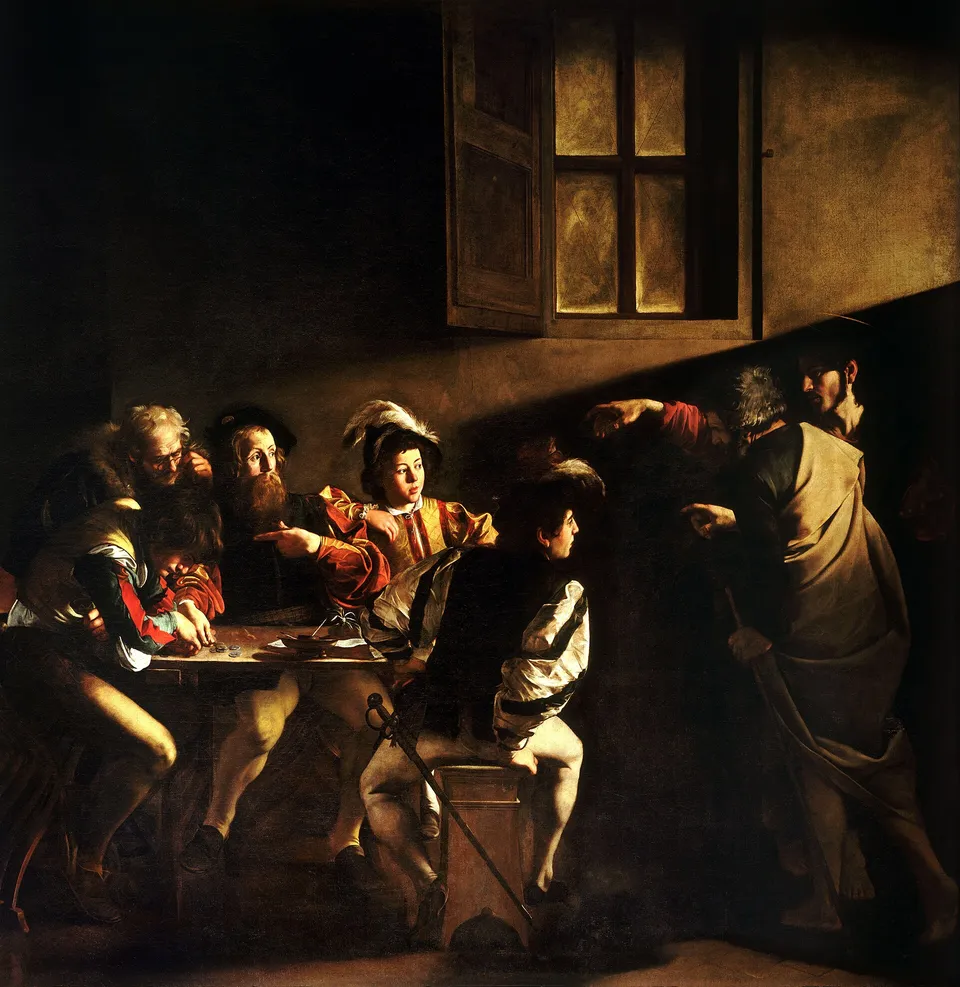
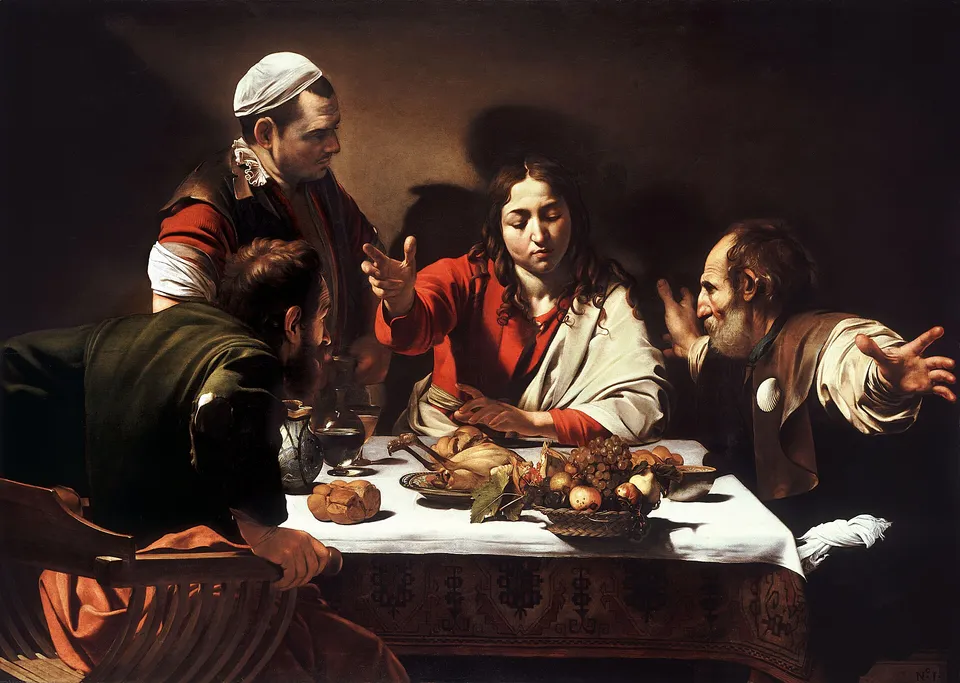
Deeply influenced by Caravaggio, Artemisia set the scene in pitch darkness with fierce . Light from the left catches the three figures' interlocking arms in an X-shaped composition centred on the sword, concentrating all the force where meets the neck.
flies in graceful arcs, something rarely seen in painting of the time. Some scholars link it to her friend Galileo, who was then studying the parabolic paths of projectiles.
Judith's gold silk gown, her and the folds of the sheets are painted with great refinement, in stark contrast to the brutal action; such luxury was part of her appeal to aristocratic collectors.
Details
Symbolism
The maid as accomplice
In traditional depictions the maid is an elderly bystander holding the sack for the head. Artemisia makes the young pin Holofernes down with all her strength, fighting alongside Judith: an image of solidarity and power between women.
The huntress on the bracelet
The small images on Judith's bracelet are thought to show Artemis (Diana), goddess of the hunt, whose name shares its root with “Artemisia”, perhaps a clever hidden signature.
Virtue over tyranny
In Christian tradition Judith stands for humility and courage defeating pride and tyranny; Florentines saw her as a symbol of republican liberty, and Donatello's bronze Judith stood before their town hall.
Stories
- Did you know?
After the painting was delivered, the grand-ducal court was slow to pay for years; according to tradition, Galileo intervened to help Artemisia finally receive her fee.
- Did you know?
The painting's violence is said to have disturbed viewers, and for a time it hung in an out-of-the-way corner of the Uffizi.
- Did you know?
Artemisia was rediscovered through feminist art history in the 1970s and is now one of the most celebrated Baroque painters.
Legacy
The painting is a high point of Caravaggesque Baroque art and transformed the tradition of the Judith theme. It proved that a woman painter could not only master grand history painting but also bring a perspective entirely different from men's.
Today Artemisia has become a symbol of women's strength in art, and major museums have staged exhibitions of her work to large audiences.