Morning light pours through the window into a kitchen as a maid carefully pours milk into an earthenware bowl. Time seems to stand still; only a thin stream of milk moves. Vermeer turned the humblest household task into a quiet poem.
Key facts
- Artist
- Johannes Vermeer1632–1675 · Dutch
- Date
- c. 1657–58
- Period
- Baroque1600–1720
- Medium
- Oil on canvas
- Dimensions
- 45.5 × 41 cm
- Location
- Rijksmuseum Amsterdam, Netherlands
Actual size
Compared with an adult 170 cm tall
Palette
#D4CDBA#141920#554535#3B2A1C#AB9E84Background
The Protestant Dutch Republic of the seventeenth century lacked large church and royal commissions, so painters produced of everyday life for middle-class buyers. Kitchen maids were a common subject, often with flirtatious or moralising overtones.
Vermeer gave this maid gravity and dignity. She is sturdy and absorbed, as if performing a sacred rite. Scholars suggest she is making bread pudding, soaking stale bread in milk, a thrifty household practice of the time.
The painting was owned by a Delft collector during Vermeer's lifetime and described as “exceptionally good” in a 1696 auction record. The Rijksmuseum bought it in 1908.
Technique & composition
Vermeer's handling of light is unrivalled. It enters through on the left, lighting the maid's face and arms and spreading in soft gradations across the white wall; even and its shadow are carefully recorded.
is covered with tiny dots of light that make its crust glitter. These pointillé highlights may reflect the influence of the camera obscura, in which out-of-focus reflections become little circles of light.
The palette is built on yellow and blue. The maid's is painted in costly natural ultramarine, complementing her yellow bodice. The composition, made of triangles and straight lines, feels stable and serene.
Details
Symbolism
The flowing milk
is the only thing moving in the picture; it gives rhythm to frozen time and symbolises diligent housekeeping and nourishment.
The foot warmer and Cupid
on the floor often carried amorous connotations in Dutch painting, since women placed them under their skirts; on beside it is a Cupid with his bow. They may hint at the maid's romantic thoughts, but Vermeer treats the idea with great restraint.
The dignity of work
Unlike the maids mocked by many of his contemporaries, Vermeer's is dignified and absorbed. She embodies virtues prized in Dutch Protestant culture: industry, thrift and simplicity.
Stories
- Did you know?
X-rays show that Vermeer originally painted a wall map or rack on the back wall, and a laundry basket where the foot warmer now stands. He painted them out to simplify the composition.
- Did you know?
When the Rijksmuseum lent the painting to Japan, visitors queued for hours just to glimpse this small canvas.
- Did you know?
At 45.5 × 41 cm it is smaller than an ordinary poster, yet its light and texture give it an enormous presence in the gallery.
Legacy
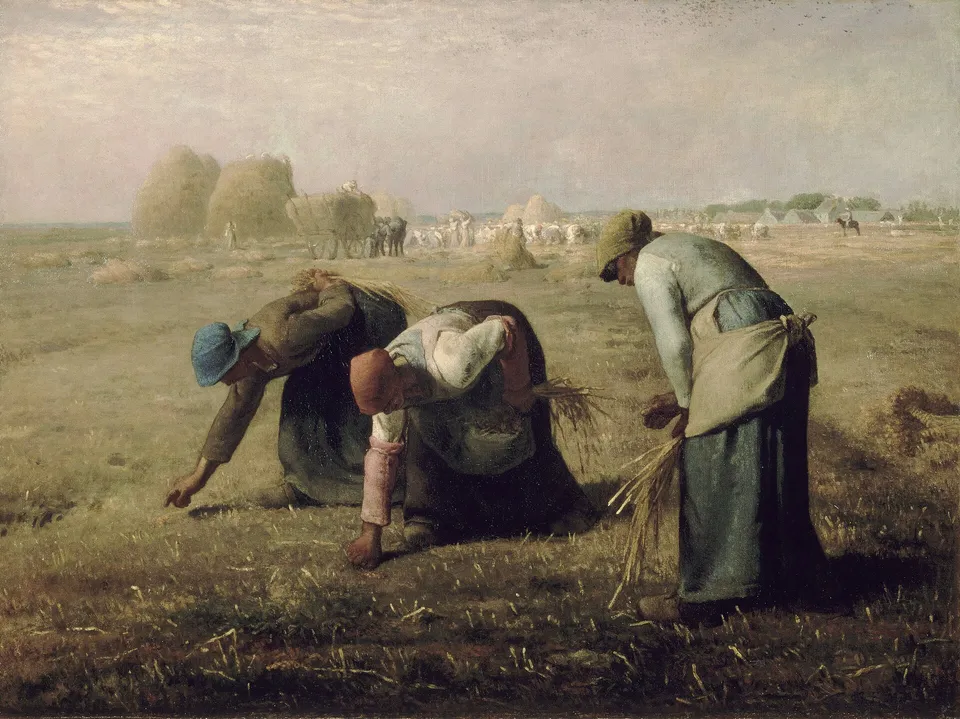
The Milkmaid is regarded as the high point of Dutch genre painting, proof that everyday life can be the stuff of great art. The respect it shows for working people inspired nineteenth-century French Realists such as Millet and Courbet.
Today it is one of the defining images of Dutch culture, appearing in advertising, on stamps and merchandise; a dairy company has even used it as its logo.