In a gloomy tax office, a few fashionably dressed men are counting coins. Christ enters from the right and points, and a shaft of light follows his gesture. Caravaggio moved a Bible story into a Roman tavern and stunned all of Europe with stage-like light.
Key facts
- Artist
- Caravaggio1571–1610 · Italian
- Date
- 1599–1600
- Period
- Baroque1600–1720
- Medium
- Oil on canvas
- Dimensions
- 322 × 340 cm
- Location
- San Luigi dei Francesi Rome, Italy
Actual size
Compared with an adult 170 cm tall
Palette
#090706#3E2818#6D4C2E#B3976EBackground
This was Caravaggio's first public commission. The Contarelli Chapel in San Luigi dei Francesi in Rome had been funded by the French cardinal Matthieu Cointrel (Contarelli), but its decoration had dragged on for years. In 1599 the young Caravaggio was engaged to paint three scenes from the life of Saint Matthew, of which this is one.
Matthew was a tax collector for the Romans, despised by his fellow Jews as a sinner. The Gospel tells how Jesus passed the tax booth and said to him, “Follow me,” and Matthew rose at once and followed, becoming one of the twelve apostles.
When unveiled, the paintings caused a sensation. Some admired their realism and drama; others condemned them as too worldly and coarse for sacred subjects. Caravaggio was famous overnight.
Technique & composition
Caravaggio used : most of the space sinks into darkness, and only catches faces and hands. The light seems to arrive with Christ's gesture, and is also a symbol of divine grace.
The picture divides into two halves: on the left the worldly men at the table in the silks and feathered caps of contemporary Rome; on the right, barefoot and Peter in timeless robes. Two worlds meet in this instant.
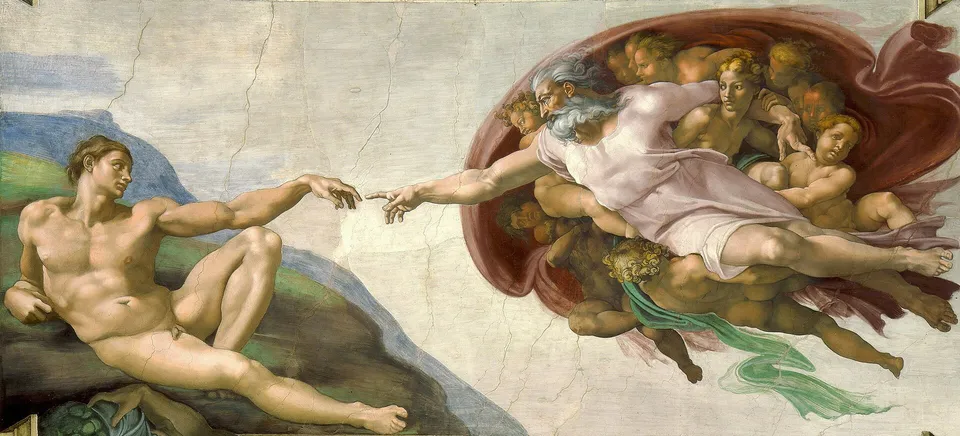
, languid and elegant, is almost a mirror of Adam's hand in Michelangelo's Creation of Adam. Caravaggio implies that Christ is the “new Adam”, and that this calling is a spiritual rebirth.
Details
Symbolism
Which one is Matthew?
Traditionally is Matthew, pointing to himself as if to ask, “Me?” Some scholars now argue that the real Matthew is , head bowed over the coins; the bearded man points at him, while the youth is still absorbed in money and has not yet noticed the call. The debate continues.
The window that lets in no light
The above is dark; the light does not enter through it but comes from beyond the picture, behind Christ. It is a supernatural light that illuminates the soul, not ordinary daylight.
The coins
The coins scattered on the table stand for Matthew's past and the lure of the world. To follow Christ means leaving it all behind.
Stories
- Did you know?
X-rays show that Caravaggio originally painted Christ alone on the right; Peter was added later, perhaps at the Church's request, to represent the Church as mediator between humanity and God.
- Did you know?
Caravaggio used real people from the streets of Rome as models; some of the young men at the table may be friends and assistants who appear in his other works.
- Did you know?
The painting still hangs in its original chapel, where visitors drop a coin to switch on the lights, a fitting ritual for a masterpiece about light.
Legacy
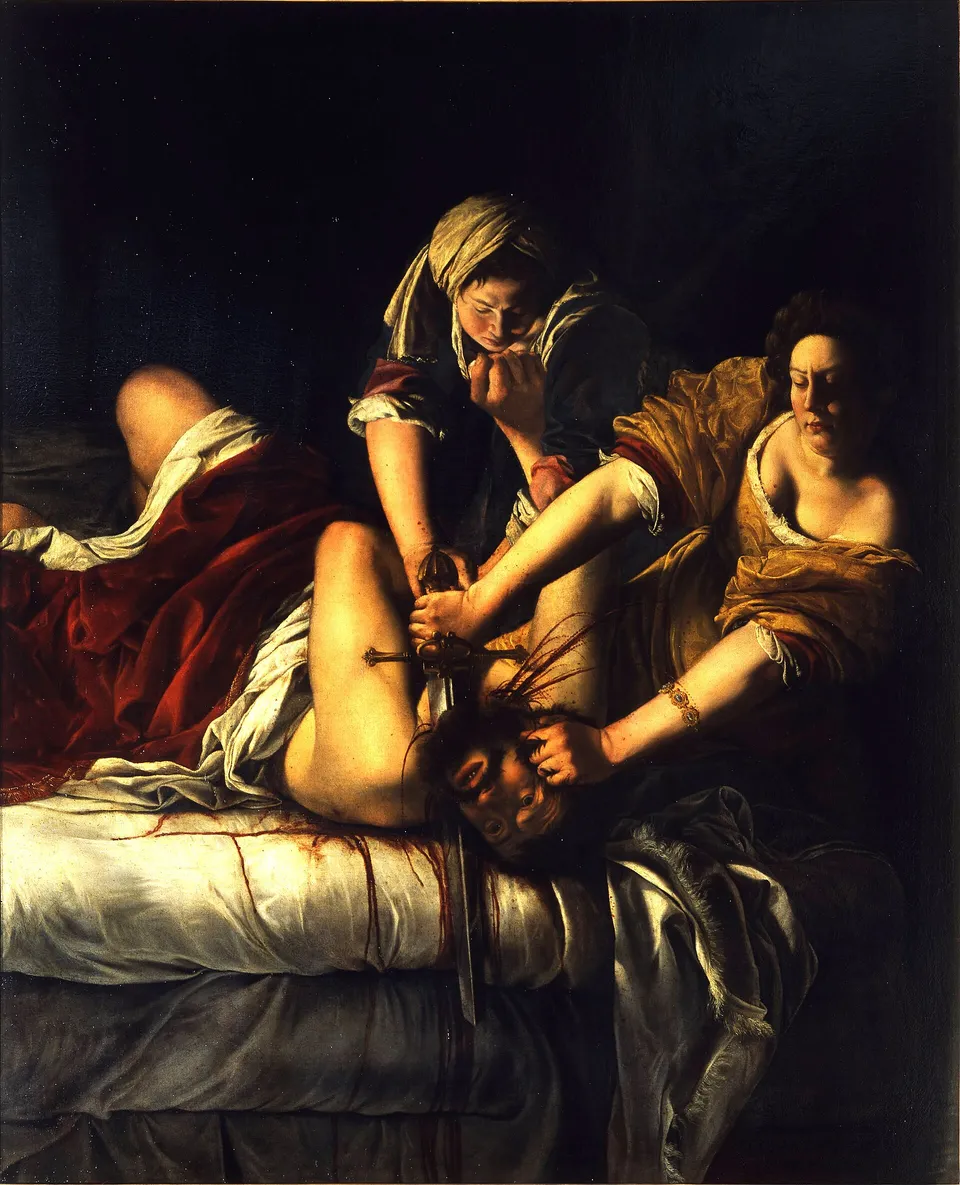
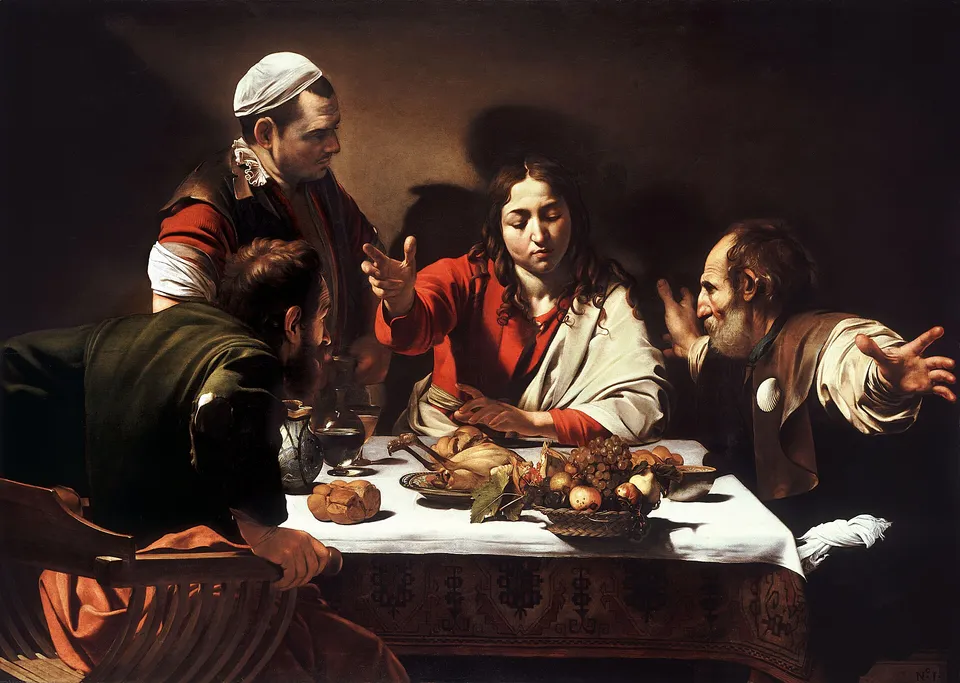
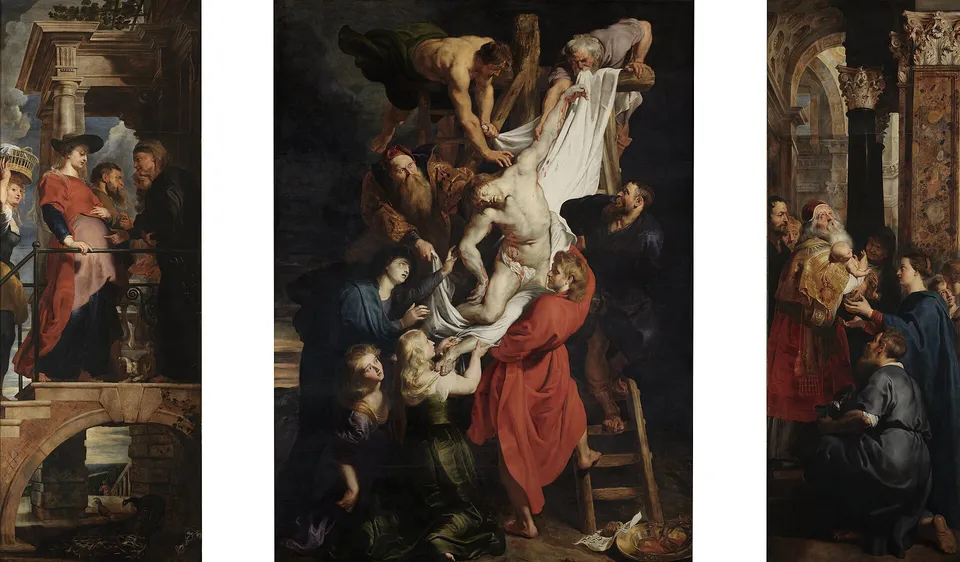
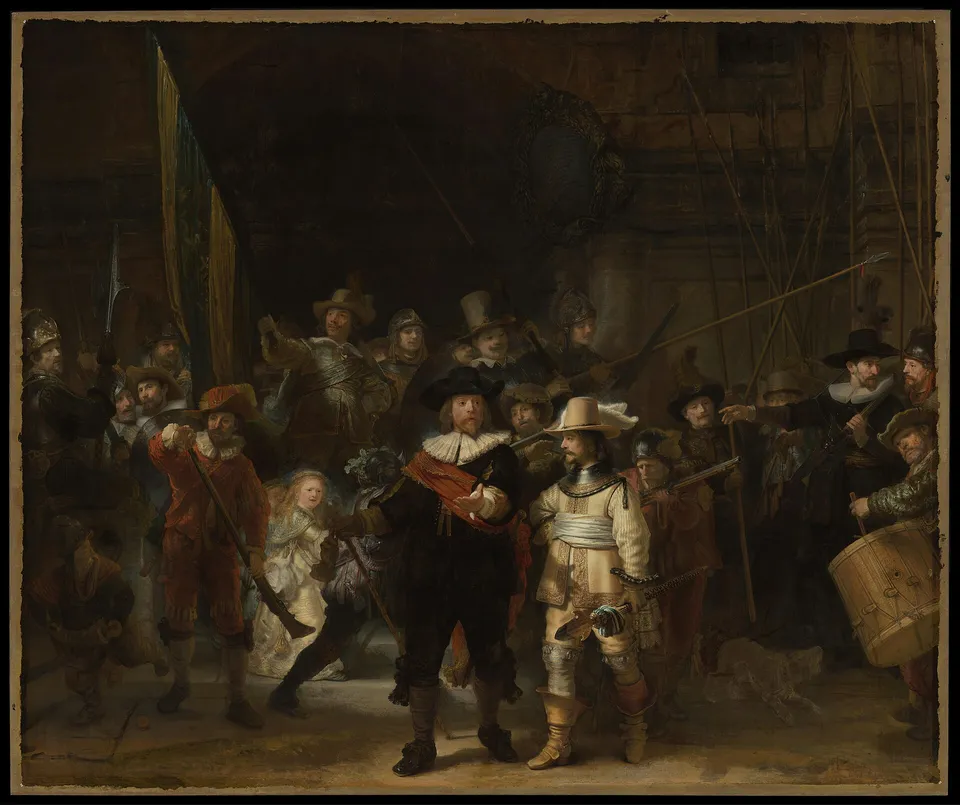
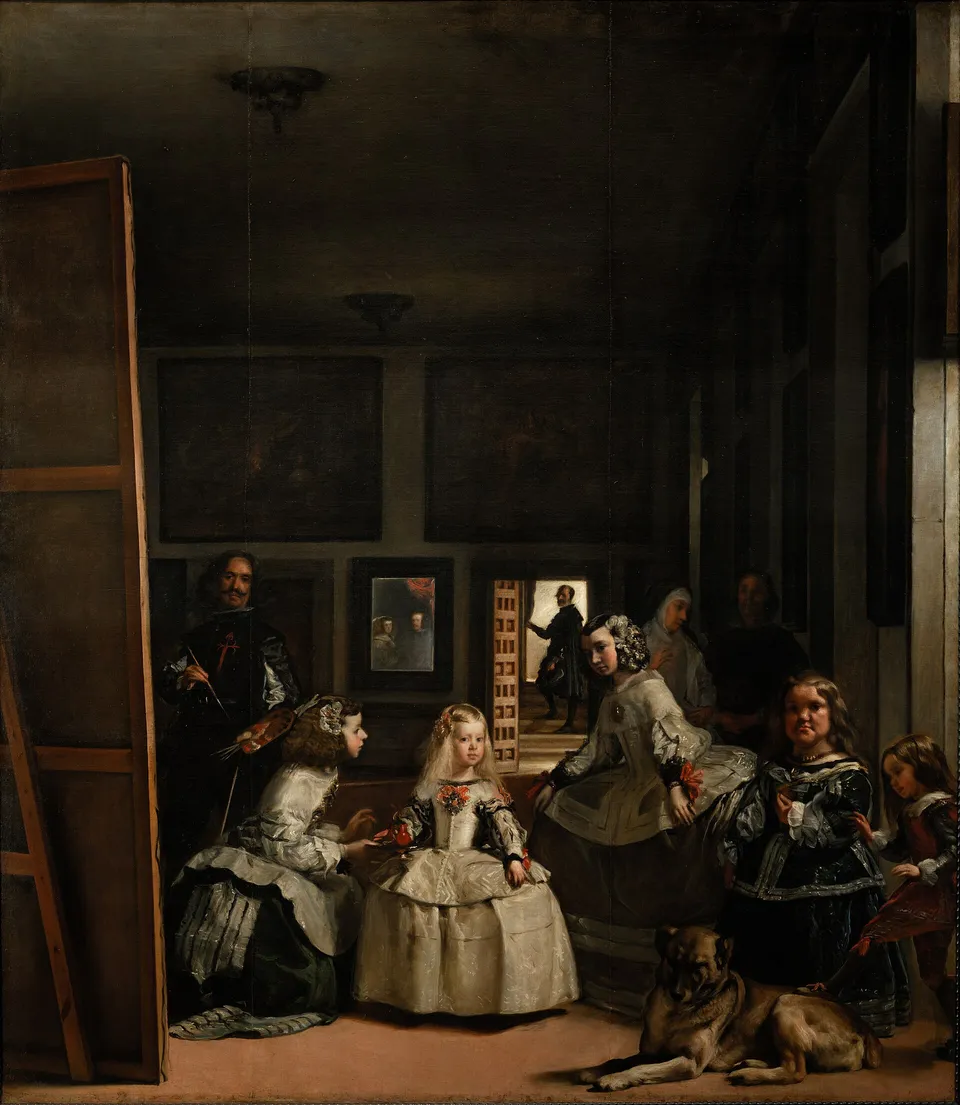
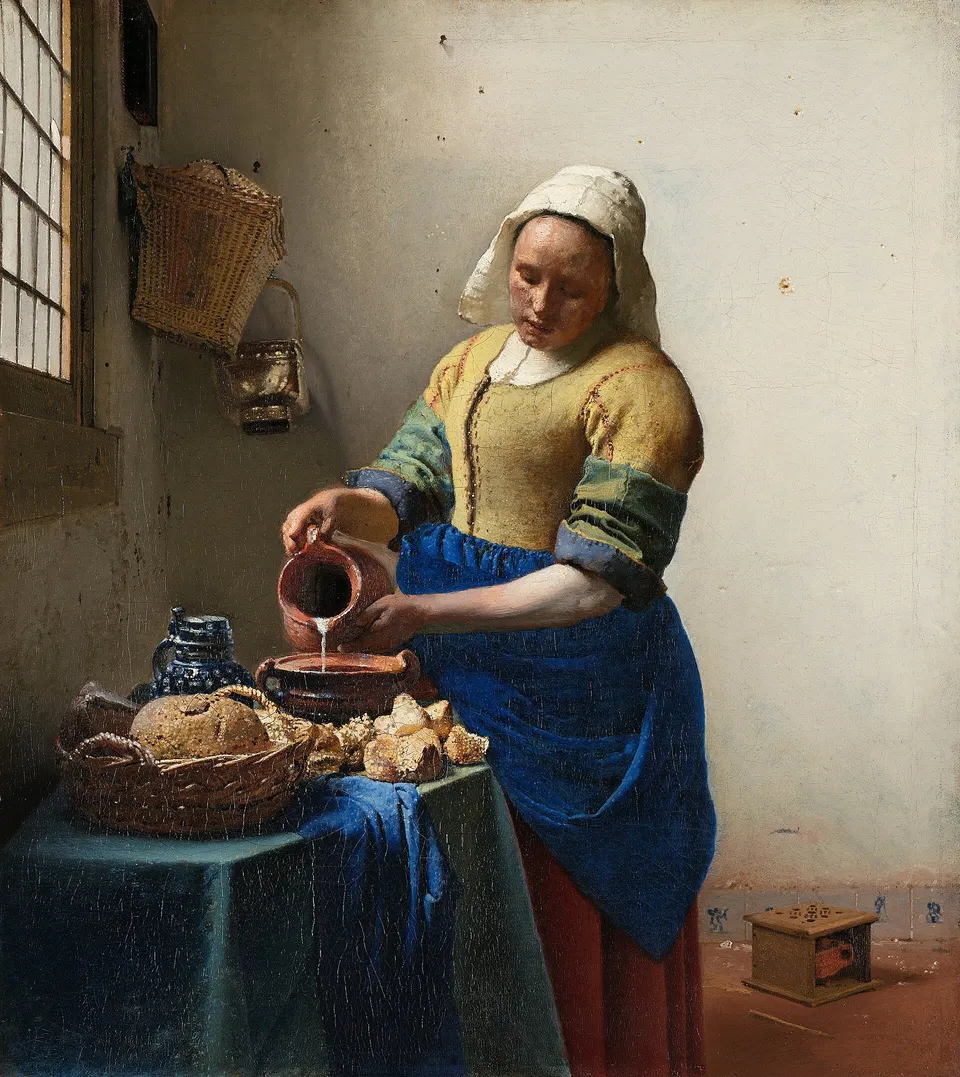
The painting launched a new language for Baroque art: fierce contrasts of light, real people and dramatic moments. Its influence spread across Europe to the Caravaggisti, including Artemisia Gentileschi, the young Rubens and Velázquez, and the Utrecht painters in the Netherlands.
Rembrandt, who never went to Italy, absorbed Caravaggio's light through the Utrecht painters; even in modern cinema, dramatic low-key lighting is sometimes called “Caravaggesque”.