Elegant couples linger on the island of love and drift, pair by pair, towards a golden boat while cupids flutter overhead. With this painting Watteau created the fête galante and ushered in the Rococo. Yet beneath its lightness runs a gentle melancholy at the passing of pleasure.
Key facts
- Artist
- Antoine Watteau1684–1721 · French
- Date
- 1717
- Period
- Rococo1720–1780
- Medium
- Oil on canvas
- Dimensions
- 129 × 194 cm
- Location
- Musée du Louvre Paris, France
Actual size
Compared with an adult 170 cm tall
Palette
#C5CDCD#4D3C1C#74592C#8B7A54#5E5B40Background
Cythera is the Greek island where Venus came ashore after her birth, and it was imagined as the realm of love. Early eighteenth-century French plays often used the “voyage to Cythera” as a symbol of lovers' romantic journeys.
In 1712 Watteau applied to join the French Royal Academy of Painting and Sculpture and had to submit a reception piece. He took five years to deliver this painting. The Academy's hierarchy of genres had no category for it, so it created a new one for him: painter of fêtes galantes.
After Louis XIV died in 1715, the aristocracy left the stiff formality of Versailles for lighter pleasures in Paris. Watteau's painting captured this new mood perfectly. He soon painted a second, similar version, now in Charlottenburg Palace, Berlin.
Technique & composition
Deeply influenced by Rubens and the Venetians, Watteau painted the silks with light, shimmering strokes in soft, warm colours. The distant landscape dissolves into a golden haze, like a dream.
The figures form a curving line from right to left, pair after pair, like frames of a film: are still flirting, man helps his companion to her feet, and in the woman glances back wistfully as they head down the slope.
The composition is closed on the right by tall trees and and opens on the left to sky and water, so the eye follows the figures from density to openness, from lingering to departure.
Details
Symbolism
Arriving or leaving?
The title suggests a voyage to Cythera, but the statue of Venus is already garlanded with roses and the couples seem to have spent their time on the island and are preparing to leave. Many scholars believe the scene shows the moment of departure, which explains its gentle sadness.
Venus garlanded with roses
The stone herm on the right is Venus, wreathed in roses; beneath her hang a bow, arrows and armour, meaning that love conquers all.
The cupids
circle over the boat, guiding the lovers aboard and blending reality with myth.
Stories
- Did you know?
Watteau suffered from tuberculosis and died at thirty-six, four years after completing this painting; the melancholy of his work is often linked to his illness.
- Did you know?
During the Revolution the painting was seen as a symbol of aristocratic frivolity; academy students are said to have pelted it with bread pellets.
- Did you know?
Debussy's piano piece L'isle joyeuse (The Joyous Isle) was inspired by Watteau's painting.
Legacy
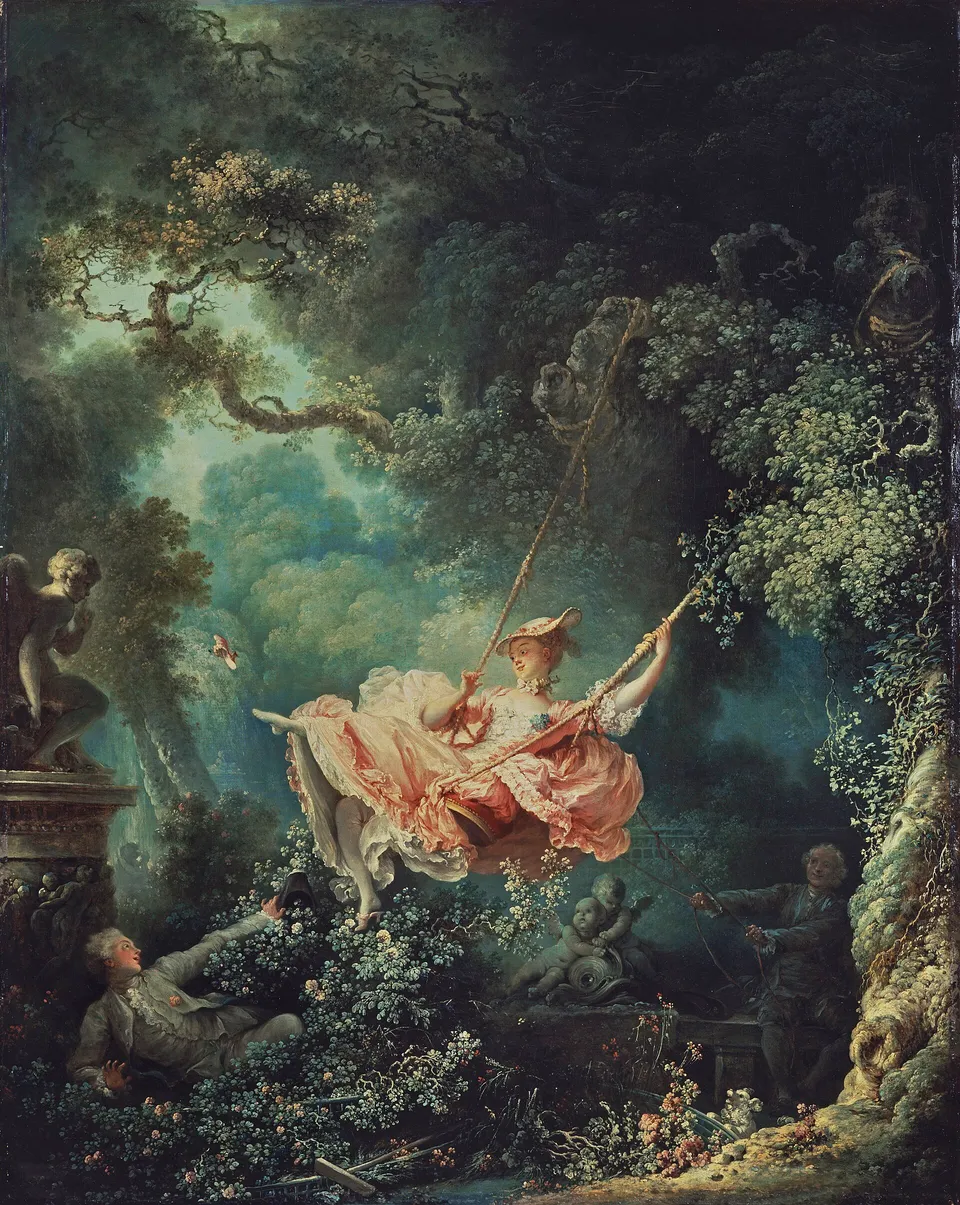
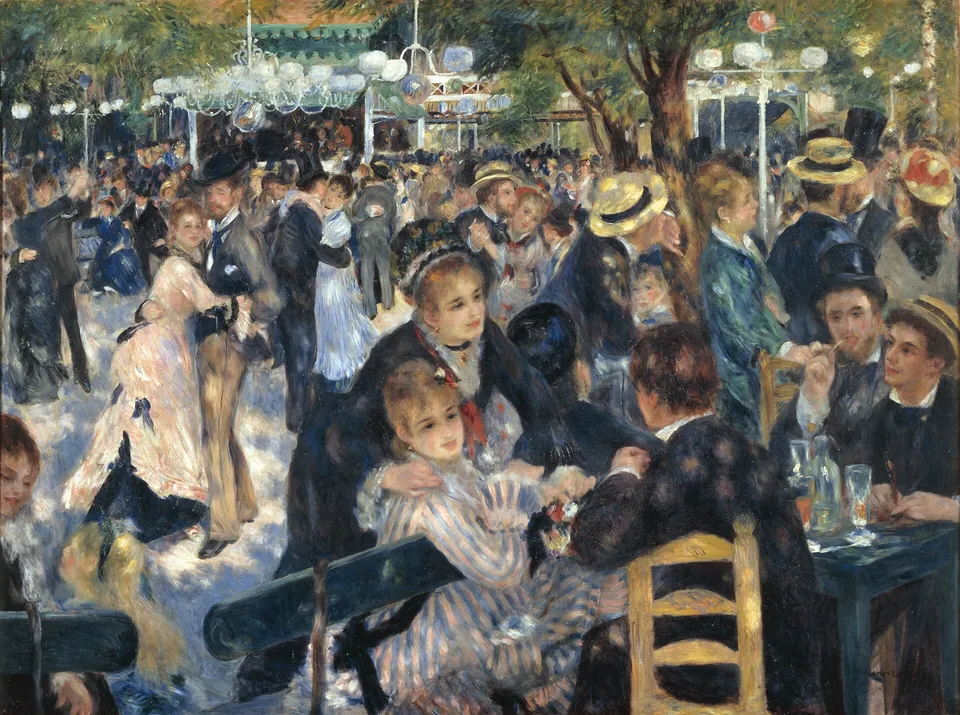
The fête galante launched by Pilgrimage to Cythera dominated eighteenth-century French painting, with Boucher and Fragonard as its heirs. In the nineteenth century the Goncourt brothers revived Watteau's reputation, and his handling of light and colour inspired Impressionists such as Renoir.
Its poetry and wistfulness also shaped literature and music, from Baudelaire to Verlaine's Fêtes galantes, all echoing this mood of melancholy within pleasure.